Support will be used to advance digital equity in Essex County
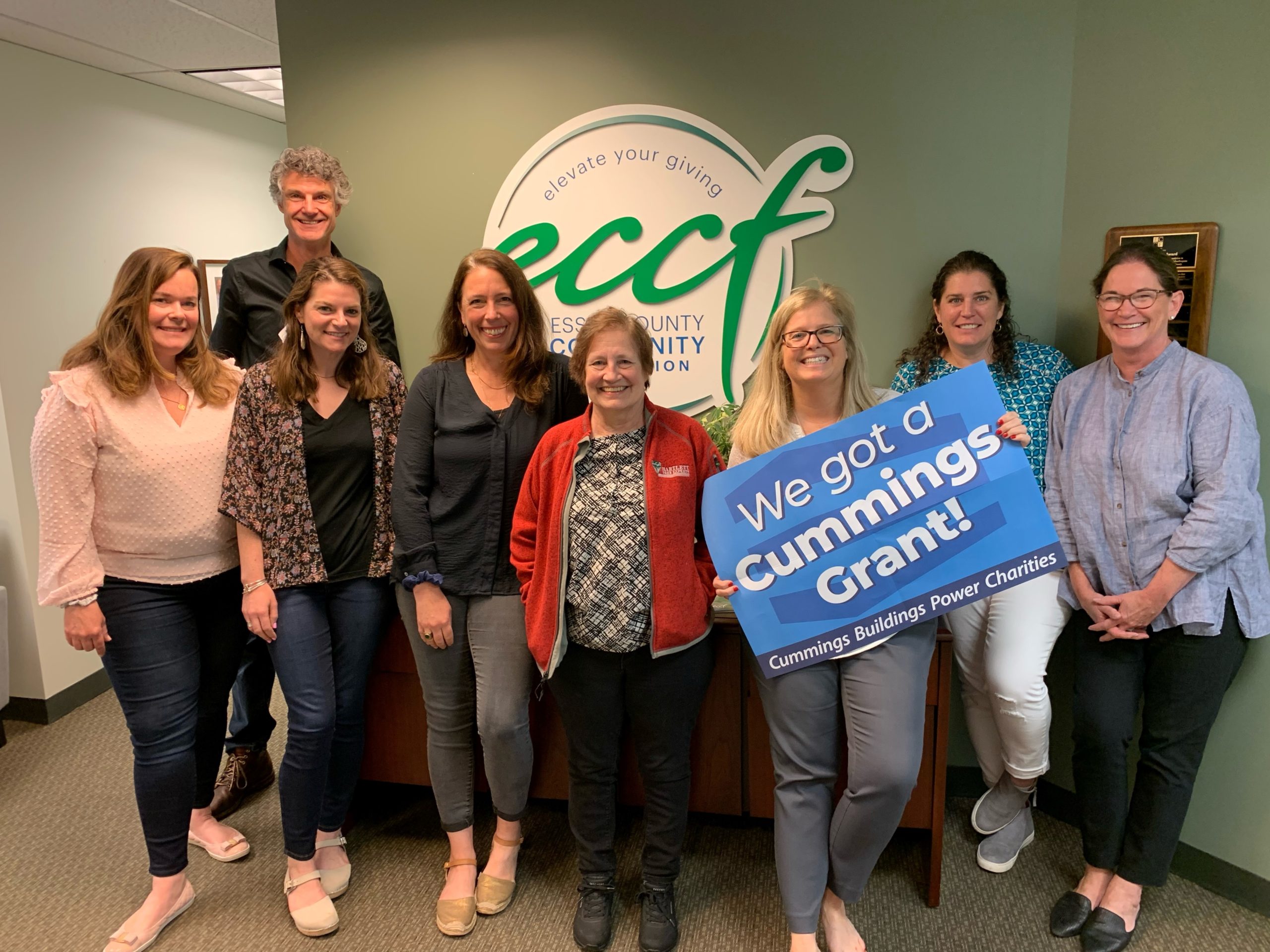
Danvers, MA – Essex County Community Foundation (ECCF) is one of 140 local nonprofits to receive grants of $100,000 to $500,000 each through Cummings Foundation’s $25 Million Grant Program. ECCF, an organization that supports the 34 cities and towns of Essex County, was chosen from 580 applicants during a competitive review process and will receive $350,000 over 10 years.
These funds will be used to support ECCF’s Advancing Digital Equity initiative, which aims to empower all Essex County residents with the access, education and equipment necessary to successfully navigate our increasingly digital world.
“The COVID-19 pandemic challenged us to look at just how wide the gap is between those with digital access and those without,” said ECCF President and CEO Beth Francis. “In Essex County, one out of every five households lack a basic computer and 160,000 residents do not have access to the internet.”
Through cross-sector collaboration and by working closely with individual communities, ECCF aims to connect 20,000 residents with free or affordable internet access; train 1,000 individuals and business owners to confidently use a computer and perform tasks online; and provide 5,000 residents with reliable devices.
“Digital access is no longer a nice-to have; it’s a necessity for everyone,” said Francis. “This generous award from Cummings will enable us to continue our systems-based work to close the digital divide in Essex County and we are extremely grateful for their support.”
The Cummings $25 Million Grant Program supports Massachusetts nonprofits that are based in and primarily serve Essex, Middlesex and Suffolk counties.
Through this place-based initiative, Cummings Foundation aims to give back in the areas where its affiliate, Cummings Properties, owns commercial property.
“We are so fortunate in Greater Boston to have such effective nonprofits, plus a wealth of talented, dedicated professionals and volunteers to run them,” said Cummings Foundation Executive Director Joyce Vyriotes. “We are indebted to them for the work they do each day to provide for basic needs, break down barriers to education and health resources, and work toward a more equitable society.”
With the help of about 90 volunteers, the Foundation first identified 140 organizations to receive grants of at least $100,000 each. Among the winners were first-time recipients as well as nonprofits that had previously received Cummings Foundation grants. Forty of this latter group of repeat recipients were then selected to have their grants elevated to 10-year awards ranging from $200,000 to $500,000 each.
This year’s grant recipients represent a wide variety of causes, including food insecurity, immigrant and refugee services, social justice, education and mental health services. The nonprofits are spread across 45 different cities and towns.
The complete list of 140 grant winners, plus more than 900 previous recipients, is available at CummingsFoundation.org.
To learn more about ECCF’s digital equity work, please visit eccf.org/digital-equity.
About ECCF
The mission of Essex County Community Foundation is to inspire philanthropy that strengthens the communities of Essex County. We do this by managing charitable assets, strengthening and supporting nonprofits and engaging in strategic community leadership. Since 1998, ECCF and its growing family of nearly 270 charitable funds have granted $120 million to nonprofits, schools and students in Essex County and beyond. Our ultimate goal is to have 34 thriving cities and towns in Essex County and to improve the quality of life for the region’s nearly 800,000 residents. Learn more at eccf.org.
About Cummings Foundation
Woburn-based Cummings Foundation, Inc. was established in 1986 by Joyce and Bill Cummings and has grown to be one of the largest private foundations in New England. The Foundation directly operates its own charitable subsidiaries, including New Horizons retirement communities, in Marlborough and Woburn, and Cummings Health Sciences, LLC. Additional information is available at www.CummingsFoundation.org.